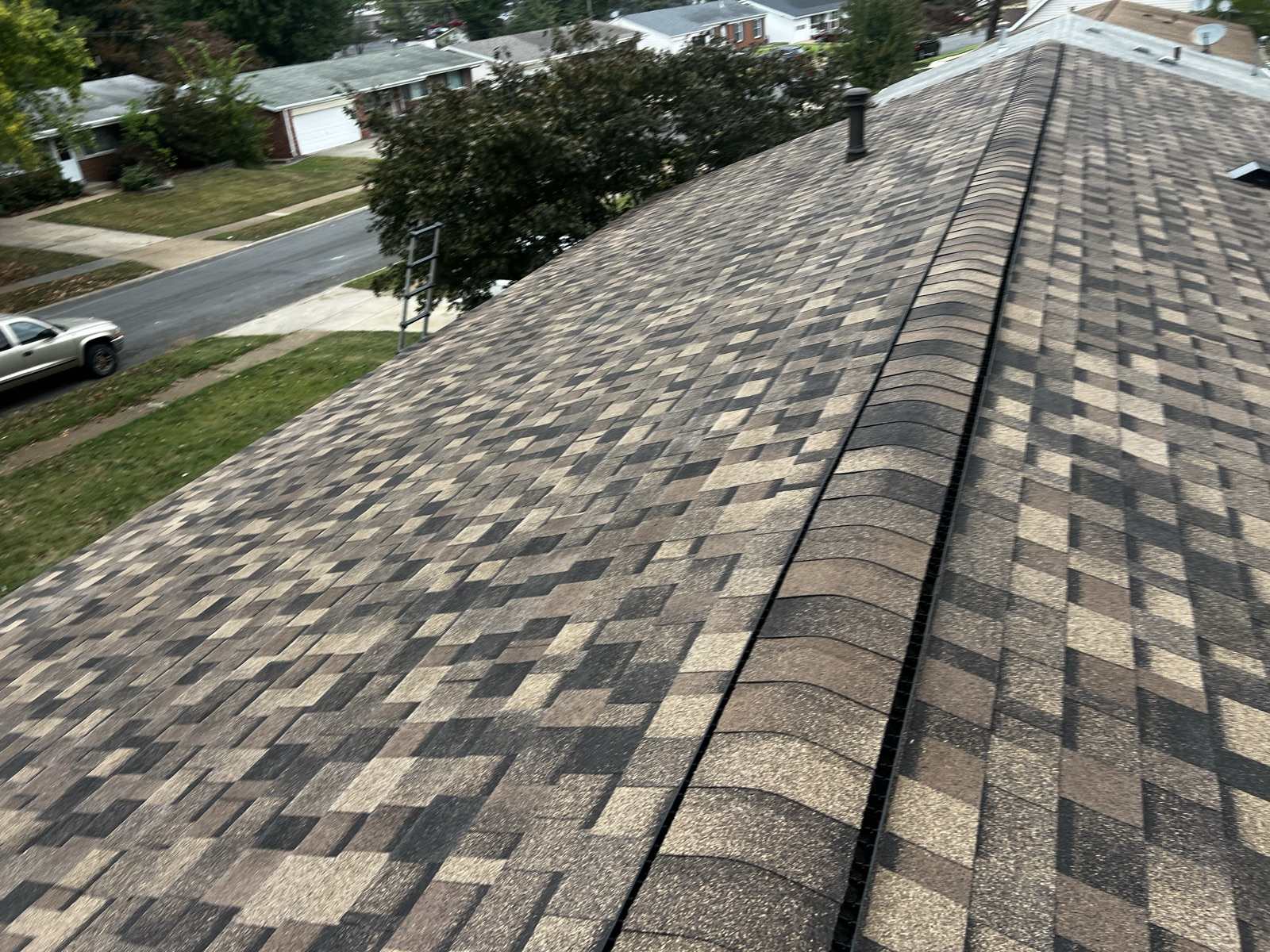
Malarkey shingles, installed / File 07
How to read a shingle quote
Fourteen things that belong on the page before anybody climbs a ladder, and the two lines that always move once the old roof is off.
The page itself
A quote is a specification or it is a number
Most roofing proposals in this market are one page with a total at the bottom. That is not a specification, it is a price, and two prices for two different specifications cannot be compared no matter how carefully you line them up. Everything below is ordinary trade information that any competent contractor can put in writing in ten minutes. A refusal to do so is itself the answer to your question.
- Manufacturer, product line and colour. Not "architectural shingle". The line name, because that is what carries the specifications and any rating.
- The impact class, if you are buying for one. Named as a class under a named standard, not as the words "impact resistant".
- Tear off, and how many layers. A second layer is more labour and more disposal weight. It belongs in the price, not in a surprise.
- Decking inspection and the price per sheet. Nobody knows what the deck looks like until the shingles are off. What can be fixed in advance is the rate you will pay per sheet, agreed in writing before the work starts.
- Underlayment type. Synthetic or felt, and the weight or grade.
- Ice and water membrane, and where. Eaves, valleys, penetrations, sidewalls, low slope sections. Locations, not a yes or no.
- Starter course product. A manufactured starter, not field shingles cut on site.
- Hip and ridge product. Same point. Cap is a separate item.
- Fasteners. Nail type and length, and the number per shingle, which the manufacturer's instructions specify and which increases on steep slopes and in high wind zones.
- Flashing. Step flashing at sidewalls, counter flashing at masonry, valley treatment, drip edge on eaves and rakes, and what happens at every penetration. New or reused, stated explicitly.
- Ventilation. What exhaust is going on, what intake exists, and whether the two are balanced. See the ventilation page.
- Permit responsibility. Who pulls it, who pays for it, and what happens if the inspector wants something changed.
- Debris, dumpster placement and magnet sweep. Where the dumpster sits, what protects the driveway and the landscaping, and how the nails come out of the lawn.
- Payment schedule and the warranty terms in writing. Ask what the workmanship warranty is, ask for the manufacturer's own limited warranty document, and get both attached to the contract rather than described at the table.
The moving lines
The two numbers that change after tear off
Two items on any honest roofing contract are estimates until the old roof is off, and a contractor who pretends otherwise is either inexperienced or is planning to have the conversation later, when you have less leverage.
The first is decking. Soft, delaminated or rotten sheathing has to be replaced, and nobody can see it through shingles. What you agree in advance is the unit price, not the quantity. The second is anything hidden behind masonry or a wall: the true state of chimney counter flashing, or a sidewall that has been face sealed with roofing cement by somebody who did not want to open it up.
Get both handled the same way. A written unit rate, a requirement that you are shown photographs of anything being charged as extra, and your authorisation before the extra work happens. That single paragraph in a contract removes most of the disputes this trade generates.
Comparing two quotes
What a difference in price usually means
When two proposals for the same house differ by a third, the difference is almost never the shingle. Bundles cost what bundles cost. The difference is usually in one of five places, and once you know them you can ask directly.
- Scope. One quote includes the garage, the porch roof or the low slope section over the addition, and the other does not.
- Tear off against layover. Going over the top of an existing roof is cheaper on the day and worse in every other respect, and in St. Louis County it changes the permit position.
- Accessories. Manufactured starter and cap against hand cut field shingle. Ice and water membrane in the valleys or not.
- Flashing. New step and counter flashing against reusing what is there and sealing it with cement.
- Labour. Who is on the roof, whether they are covered by the contractor's insurance, and whether the company will still exist next spring.
None of those five is visible in a total. All five are visible in a specification, which is why the list at the top of this page matters more than the number at the bottom of the quote.