Malarkey Shingles, Installed in St. Louis
Keys Roofing installs two brands of asphalt shingle and Malarkey is one of them. This is the file on that material: what is genuinely different about it, what the difference is worth in a hail market, and what it is not worth.
Before you read anything else: this is not a manufacturer page and it is not a dealer page. Nobody at the factory has seen it. Keys Roofing is an independent roofing contractor and is not affiliated with, endorsed by or sponsored by the manufacturer. Keys installs the product, and that is the whole of the relationship.
What follows is written for a homeowner who has been handed two or three proposals that all say "premium architectural shingle" and who wants to know whether any of that means anything. Some of it does. The parts that do are narrow, specific and checkable, and they are set out below with the source named every time the authority for a statement belongs to somebody else.
The disclaimer
Whose site this is not, stated up front rather than in the small print
A domain with a manufacturer's name in it usually belongs to the manufacturer, or to a dealer trying to look like the manufacturer. This one belongs to neither, and pretending otherwise would be the first dishonest thing on a site whose entire argument is that you should check what people tell you.
Independent installer notice
Keys Roofing is an independent roofing contractor working in greater St. Louis, Missouri, and it installs Malarkey products. This is not a manufacturer page and it is not a dealer page. Keys Roofing is not affiliated with, endorsed by, sponsored by or authorised to speak for Malarkey Roofing Products, and holds no certification, tier, accreditation or authorised dealer status from that manufacturer or from any other. The manufacturer's name appears here only to state truthfully which shingles Keys installs. Every statement about a product on this site is attributed to the manufacturer's own published specifications, and you should confirm it in that manufacturer's current literature before you rely on it.
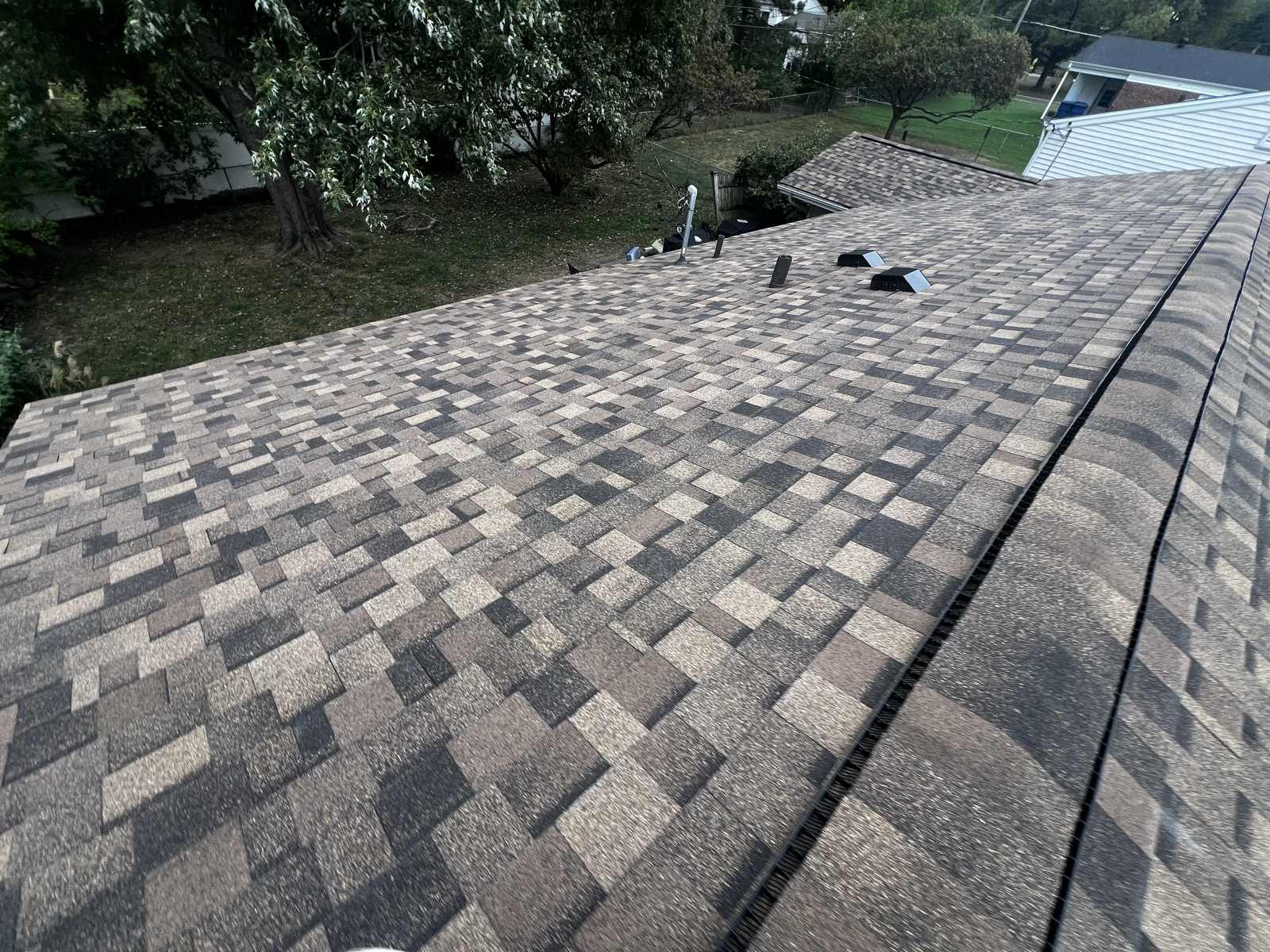
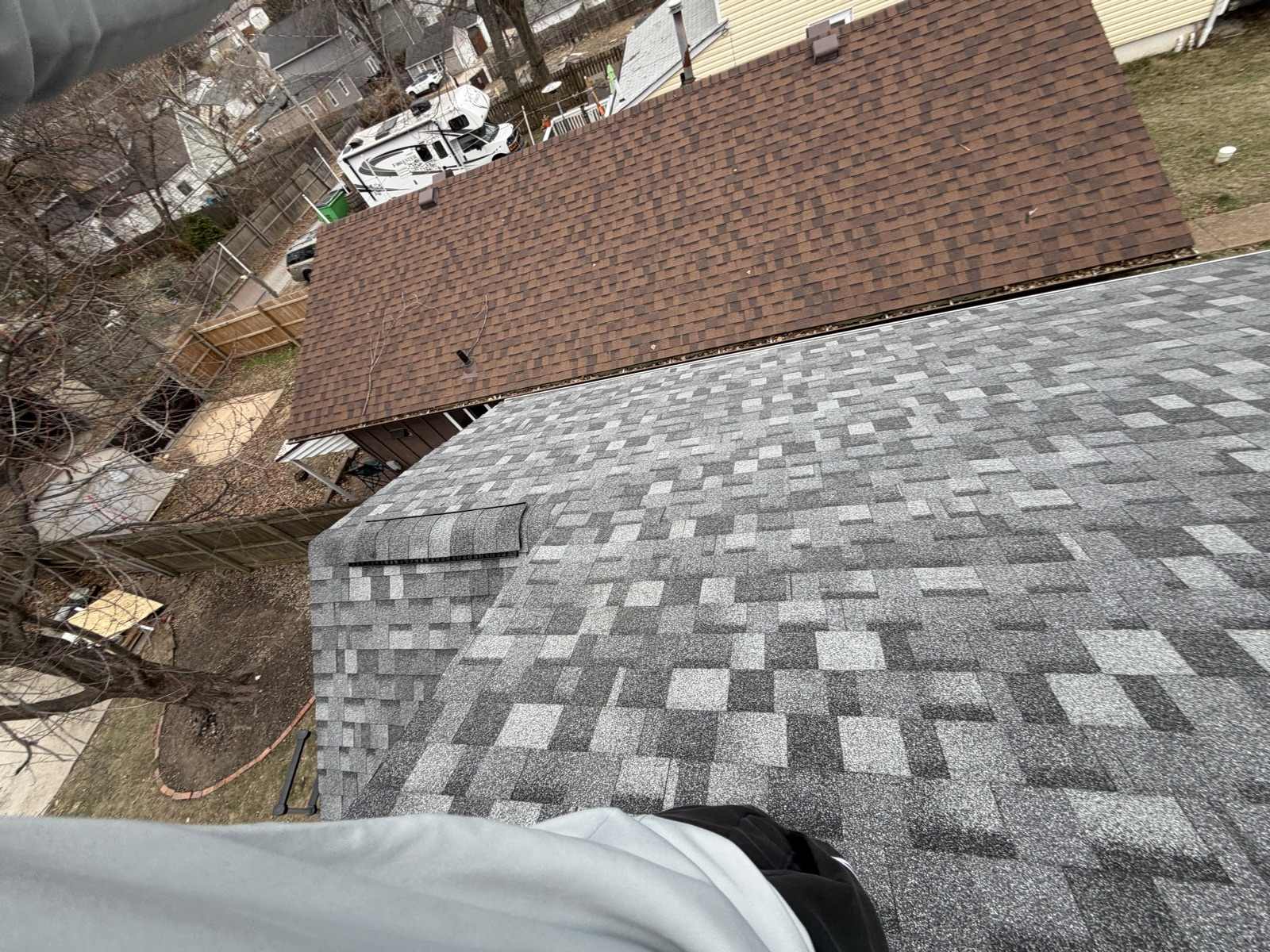
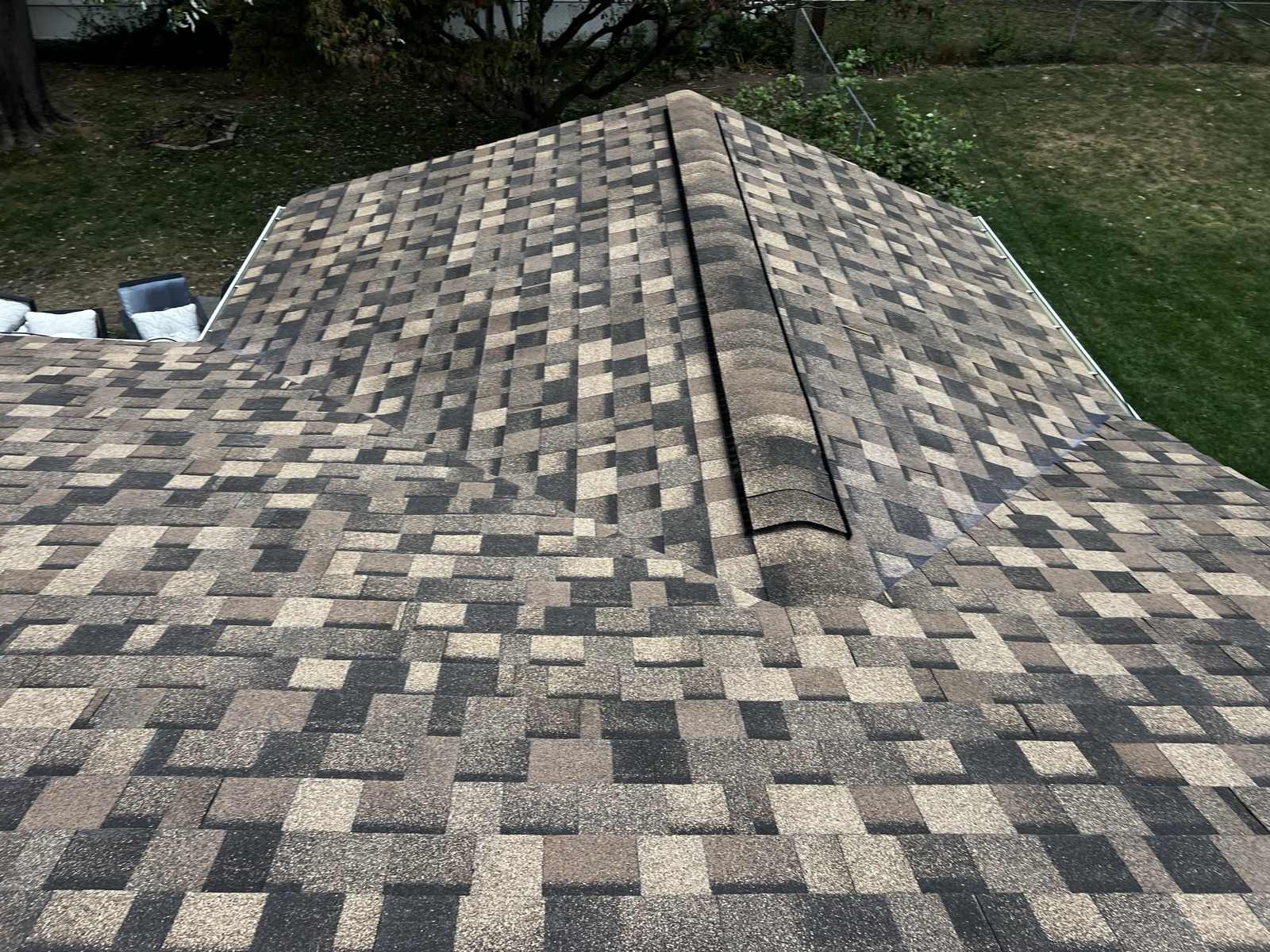
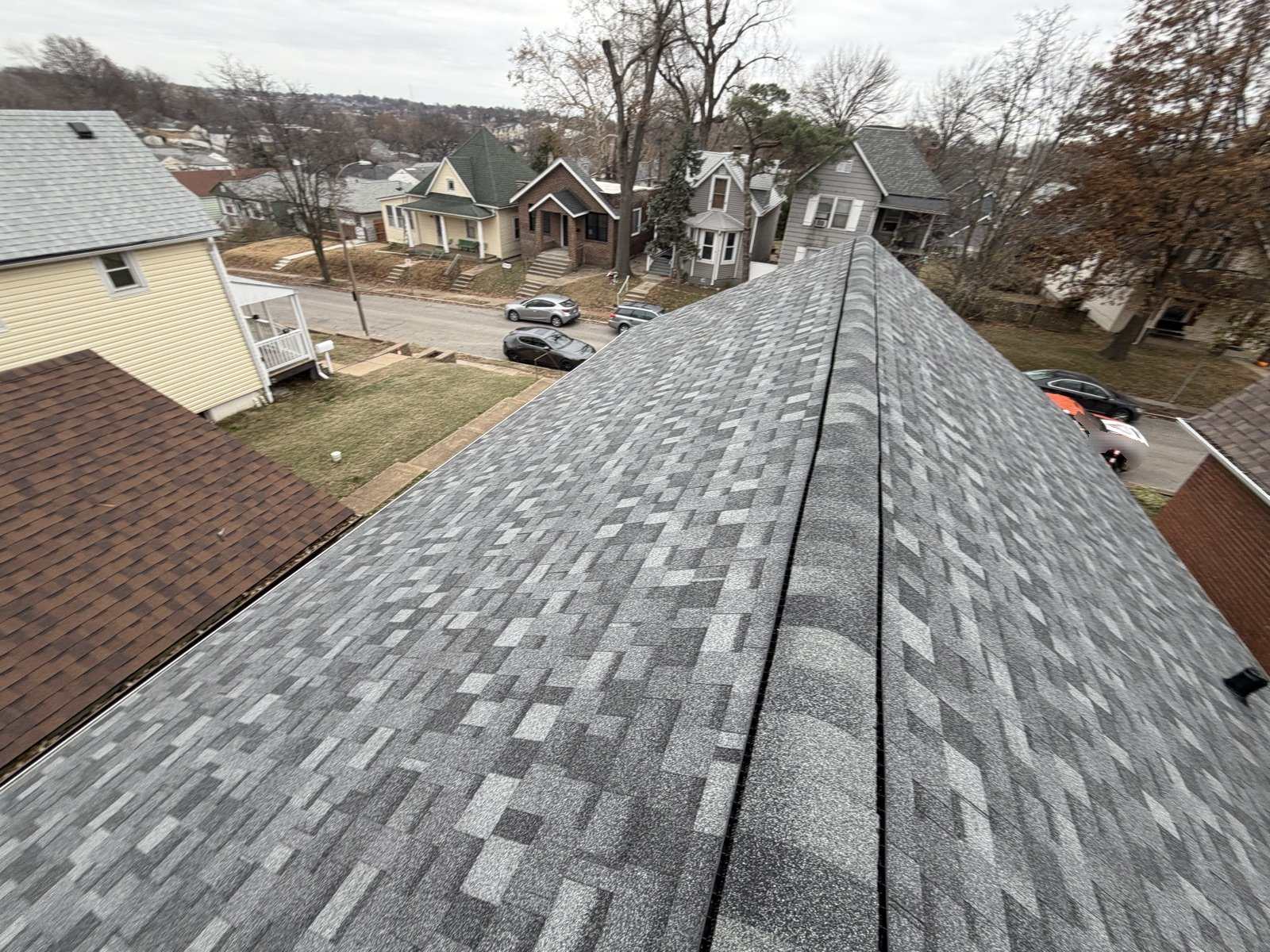
You will find no manufacturer logo on this site, no brand colours borrowed from a manufacturer's packaging, no product photography lifted from a brochure and no sentence copied out of one. The photographs are Keys jobsite photographs and they are captioned by what is in the frame. Where a photograph shows a finished roof, the caption does not tell you whose shingle it is, because we cannot read a brand off a photograph and neither can you.
The material
One real difference: the asphalt is rubberised, not oxidised
Nearly every asphalt shingle sold in this country is built the same way. A fibreglass mat is saturated and coated in asphalt, mineral granules are pressed into the top to take the ultraviolet, and a second layer is laminated on to give the shingle its shadow line. The variable that matters is what was done to the asphalt before it was coated on.
The conventional route is oxidation. Air is blown through hot asphalt until it stiffens into something hard enough to hold granules and stay put on a roof in July. It works, and it has one known consequence: a hard, oxidised asphalt is brittle when it is cold, and it keeps oxidising slowly on the roof for the rest of its life. A brittle mat struck by a stone fractures rather than absorbing the blow.
The other route is polymer modification. A rubber polymer, in this family of products a styrene butadiene styrene elastomer, is blended into the asphalt so that the finished coating behaves less like a hard shell and more like a tough, elastic skin. That is the same chemistry used to modify bitumen in commercial roofing membranes and in road asphalt, and it is not exotic or new. The practical effect is that the shingle stays flexible at low temperatures and tends to recover its shape after an impact instead of cracking.
Cold is where the difference shows up, and St. Louis has a great deal of cold immediately either side of the season that throws stones.
That is the honest core of it, and it is worth exactly as much as it is worth: a material property, not a force field. The longer version, with the layers drawn out, explains what is actually stacked up in a laminate shingle and where the polymer sits in that stack.
The rating
Class 4, and the four things people get wrong about it
UL 2218 is an impact resistance test for prepared roof coverings. A steel ball is dropped from a specified height onto the same spot on a sample twice, and the sample is then examined for cracking or tearing. There are four classes. Class 4 is the most severe, and a product that earns it has taken a two inch steel ball dropped from twenty feet, twice in the same place, without splitting.
- UL 2218
- Four classes
- Class 4 is the highest
- Manufacturer publishes which lines carry it
Whose claim this is
Several laminate lines from this manufacturer are published as carrying a Class 4 rating. That is the manufacturer's own published specification for its own products, not a measurement Keys has taken. Which specific line and colour carries which rating changes over time, so the product name on your written quote is the thing to check against the manufacturer's current literature.
The four misreadings, in the order we hear them. Class 4 is not a warranty against hail damage. It is a laboratory result on new material, and the test uses steel, not ice. A separate standard exists that fires moulded ice balls instead, and it is a different test with different results. And a Class 4 shingle nailed badly is a badly nailed roof, which is why more than half of this site is about the parts of the job that have nothing to do with which bundle was ordered. The full explanation is here.
The market
Why anybody in this metro is reading about impact ratings
Because of the stones. The National Oceanic and Atmospheric Administration's Storm Events Database logged 125 hail events in St. Louis County between 2020 and 2025. The largest measured stone in that period was 2.5 inches and the average was 1.32 inches.
| County | Logged hail events |
|---|---|
| St. Louis County | 125 |
| St. Charles County | 54 |
| Jefferson County | 44 |
| Franklin County | 30 |
Read that table honestly and it is less dramatic than a roofing advert would like. A hail event is logged when somebody reports it, so a county with a million people in it will log more reports than a county with eighty thousand, whether or not more hail fell. The ratio between those four rows is partly weather and partly population. What the numbers do support is the unremarkable conclusion that a roof in this metro will be struck, repeatedly, during its life, and that April and May carry the bulk of it.
The whole record is set out here, including what the National Weather Service published about the May 2025 tornado, what the Missouri Department of Commerce and Insurance published about that claim season, and where the widely repeated numbers on competitors' blogs came from, which in several cases is nowhere.
The money question
Does an impact rated roof lower your premium
Sometimes. Some insurers writing in Missouri offer a premium credit on a home with an impact rated roof, and some do not. Whether yours does, how large it is, how long it lasts and what documentation it wants are questions for your own carrier or your own agent. They are not questions for a roofer, and a roofer who answers them confidently is guessing with your money.
What a contractor can honestly supply is the paper: an invoice and a written scope that name the manufacturer, the product line and the colour actually installed, so that you have something to send when your carrier asks what is on the roof. Whether that earns a credit is entirely the insurer's decision.
The same page covers the legal floor that every roofer in this state works under. RSMo 407.725 provides that a contractor shall not represent or negotiate on behalf of a property owner on an insurance claim connected with roof repair or replacement, so Keys does not do that and neither may anyone else. It also covers a genuine and expiring Missouri tax credit that almost nobody is writing about. Impact rated roofs and your insurer.
Scope
What Keys does, and the short list it works from
Roofing, gutters and downspouts. There is no siding division, no window division and no commercial arm. Shingles are Atlas and Malarkey, and nothing else.
- Replacement
- Full tear off to the deck, decking replaced where it has gone soft, then underlayment, ice and water membrane at the vulnerable details, valley metal, flashings, starter, field and ridge.
- Repair
- Pipe boots, step and counter flashing, valley metal, nail pops, storm damaged sections, and the specific detail that is leaking rather than the whole plane.
- Inspection
- Photographs, measurements and a written scope you keep, whether or not Keys does the work.
- Gutter
- Seamless gutter formed on site to the length of the run, sized to the roof, hung with hidden hangers, plus guards, realignment and repair.
- Drainage
- Downspouts, extensions, reroutes and underground carry away from the foundation.
A two brand list is a deliberate limit and it costs work. If you want a profile only another manufacturer makes, Keys is the wrong contractor and will say so. What the limit buys is that the crew installs the same starter, the same hip and ridge and the same nailing pattern every week rather than reading a different instruction sheet each Monday. Why the list is two long.
The file
Ten pages, each answering one question properly
None of these is a landing page with the words changed. Each one takes a question a St. Louis homeowner actually asks about this material and answers it at the length the question deserves.
File 02
What rubberised asphalt actually isOxidised asphalt against polymer modified asphalt, drawn out layer by layer, and the honest limits of the difference.
File 03
Class 4, explained plainlyWhat UL 2218 does to a sample, what the four classes mean, and the four things people wrongly believe a Class 4 rating buys them.
File 04
The hail record for this countyNOAA counts, the 2025 season as published by the Missouri Department of Commerce and Insurance, the May 2025 tornado, and the figures that are circulating with no source at all.
File 05
Impact rated roofs and your insurerThe premium credit question, what your carrier will want to see, the statute every Missouri roofer works under, and a Missouri tax credit that expires in October 2026.
File 06
Why the shingle list is two longWhat a short list buys a crew, what it costs a company, and why a contractor claiming certification by every manufacturer is usually certified by none.
File 07
How to read a shingle quoteFourteen things that belong on the page before anyone climbs a ladder, and the two lines that always move after the tear off.
File 08
Ventilation and the shingle above itIntake against exhaust, net free area, why mixing vent types can short circuit an attic, and why manufacturers write ventilation into their own conditions.
File 09
What sits under the shinglePlank decking, underlayment, ice and water membrane, drip edge and starter. The half of the roof you will never see again.
File 10
Permits, and the licence Missouri does not issueThe St. Louis County thresholds, the municipalities that run their own licensing, and three failed bills people still cite as law.
File 11
How the work actually runsFrom the phone call to the magnet sweep, in the order it happens, including the parts homeowners are never warned about.
Questions
Asked often enough to answer here
Is Keys Roofing a certified Malarkey contractor?
No. Keys holds no certification, tier or authorised dealer status from that manufacturer or from any other, and this site claims none. Keys buys the product and installs it. If a contractor tells you they hold a manufacturer credential, ask to see the current certificate and check it with the manufacturer, because it is a claim that is easy to make and rarely checked.
Does a Class 4 shingle mean my roof will not be damaged by hail?
No. Class 4 is the top class in a laboratory impact test performed on new material with a steel ball. It says something useful about how the material behaves under impact. It is not a prediction about your roof, your storm or your claim, and no honest roofer will tell you otherwise.
Will an impact rated roof cut my insurance premium?
It might. Some carriers offer a credit for an impact rated roof and some do not, and the amount varies. Ask your own carrier or agent before you spend money expecting one. Keys can give you an invoice and a written scope naming the product installed, which is usually what a carrier asks to see.
Can Keys sort out the insurance side for me?
No, and no roofing contractor in Missouri may, because RSMo 407.725 bars a contractor from representing or negotiating on a property owner's insurance claim. What Keys does is photograph and measure the roof, put the scope in writing, and attend on site as the contractor. The claim itself stays between you and your insurer.
Do I need a permit to replace my roof?
It depends on where you live and what is being done. In unincorporated St. Louis County the baseline is that a like for like asphalt replacement on a slope of 4:12 or steeper does not require one, while a shallower slope does, a change of material does, and replacing more than a quarter of the decking does. Incorporated municipalities set their own rules on top of that. Confirm with your own building division before the dumpster arrives.
Does Missouri license roofing contractors?
No. There is no state roofing licence in Missouri. Three separate bills to create one were filed and all three failed, so any state licence number quoted at you does not exist. Registration and licensing happen at the municipal level.