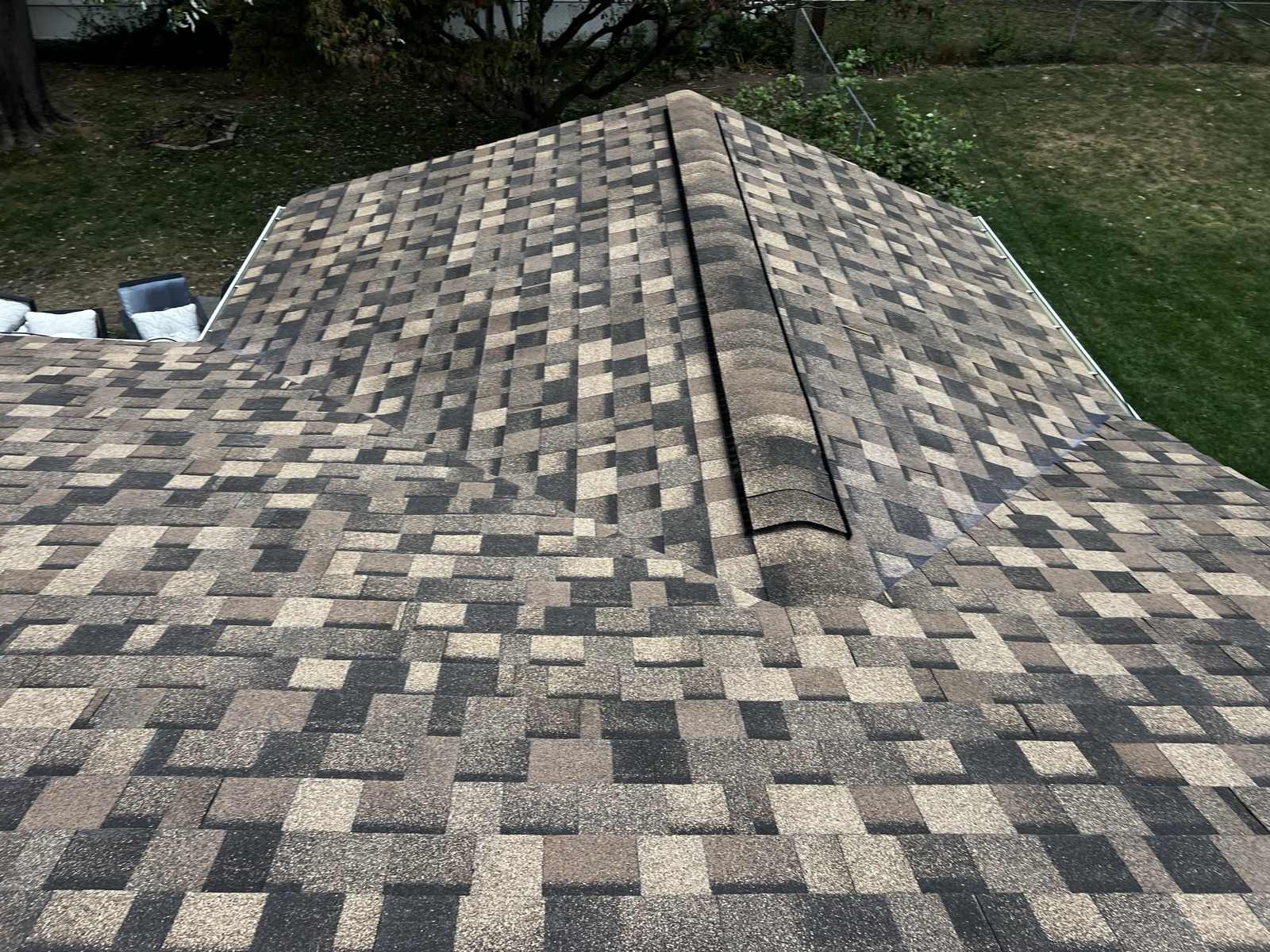
Malarkey shingles, installed / File 03
Class 4 impact rating, explained plainly
A steel ball, a twenty foot drop and a piece of tape. That is the whole test, and it is worth understanding before you pay extra for the result.
- UL 2218
- Four classes
- Class 4 is the highest
- Rating is the manufacturer's published specification
The test
What actually happens to the sample
UL 2218 is a standard for impact resistance of prepared roof covering materials. A sample of the product is mounted on a deck in the way it would be installed, and a steel ball is dropped on it from a set height. The ball is dropped twice on the same location, because a single hit on fresh material tells you less than a repeated one. The sample is then examined, front and back, for cracking, splitting or tearing of the reinforcement.
There are four classes, and they are set by ball size and drop height. Class 4, the most severe, uses a two inch steel ball dropped from twenty feet. A product passes if the examination finds no evidence of the mat having ruptured.
| Class | Steel ball | Drop height |
|---|---|---|
| Class 1 | 1.25 inch | 12 feet |
| Class 2 | 1.5 inch | 15 feet |
| Class 3 | 1.75 inch | 17 feet |
| Class 4 | 2 inch | 20 feet |
Figures for all four classes confirmed 23 August 2026 against published summaries of the UL 2218 method, including the Insurance Institute for Business and Home Safety summary of the standard. The steel ball for each class is dropped from the height that gives it the kinetic energy of a hailstone of the same diameter. Keys Roofing has not conducted the test.
Whose claim
Which products carry the rating
Attributed, not asserted
Several of this manufacturer's laminate lines are published by that manufacturer as carrying a Class 4 rating under UL 2218. That is its published specification for its own products. Keys Roofing has not conducted the test and does not certify the result. Product lines, colours and ratings are revised over time, so the line named on your written quote is the thing to check against the manufacturer's current published literature or the listing itself before you buy on the strength of a rating.
This matters more than it sounds. "Impact resistant" on a proposal is not a rating. A rating is a class, attached to a named product line, published by the manufacturer. If a quote says the first thing and not the second, ask which line and which class, and get the answer in writing on the contract rather than in a text message.
The caveats
Four honest limits on what the class means
- Steel is not ice. A steel ball is dense, hard and consistent, which is exactly what a repeatable laboratory test needs and exactly what hail is not. Real hailstones vary in density, shape and hardness, and they arrive with wind behind them. A separate standard exists that fires moulded ice balls at a sample instead, and it is a different test with different pass criteria. A product may be tested to one, the other, or both.
- The sample is new. The test is run on fresh material. A shingle that has been on a roof for a decade of St. Louis heat is not the material that was tested, whatever chemistry it started with.
- It is not a warranty. A class is a test result. Whether a manufacturer offers anything at all in respect of hail damage, and on what conditions, is a separate question answered only by the limited warranty document that comes with the product. Read that document rather than a salesman's summary of it.
- Bruising still happens. The useful failure mode of an elastic shingle under a heavy strike is a bruise: the mat is damaged but the surface has not split, so the damage is felt rather than seen. That is better for the roof and harder for an inspection, and it is a reason to have somebody walk a roof properly after a serious storm rather than look at it from a driveway.
The decision
When the rating is worth paying for
Honestly: when you intend to keep the house, when your carrier has told you it offers something for an impact rated roof, or when you are simply tired of the cycle. Those are the three real reasons, and only one of them is a roofing question.
It is worth less than it looks when the roof is going on a house you plan to sell inside a couple of years, when the rest of the specification is being cut to pay for it, or when the contractor cannot tell you which product line carries the rating. A Class 4 field shingle over a starter course of hand cut three tab, with no ice and water membrane in the valleys and an attic that cannot breathe, is a worse roof than an unrated shingle installed properly. The ranking of what actually matters is not controversial among people who do this work: fasteners first, then flashing and details, then ventilation, then the shingle.
What to do with all of this is on the next two pages. How to read a shingle quote lists what has to be named on the page, and the insurance page deals with the premium question, which is the one most people are really asking.